
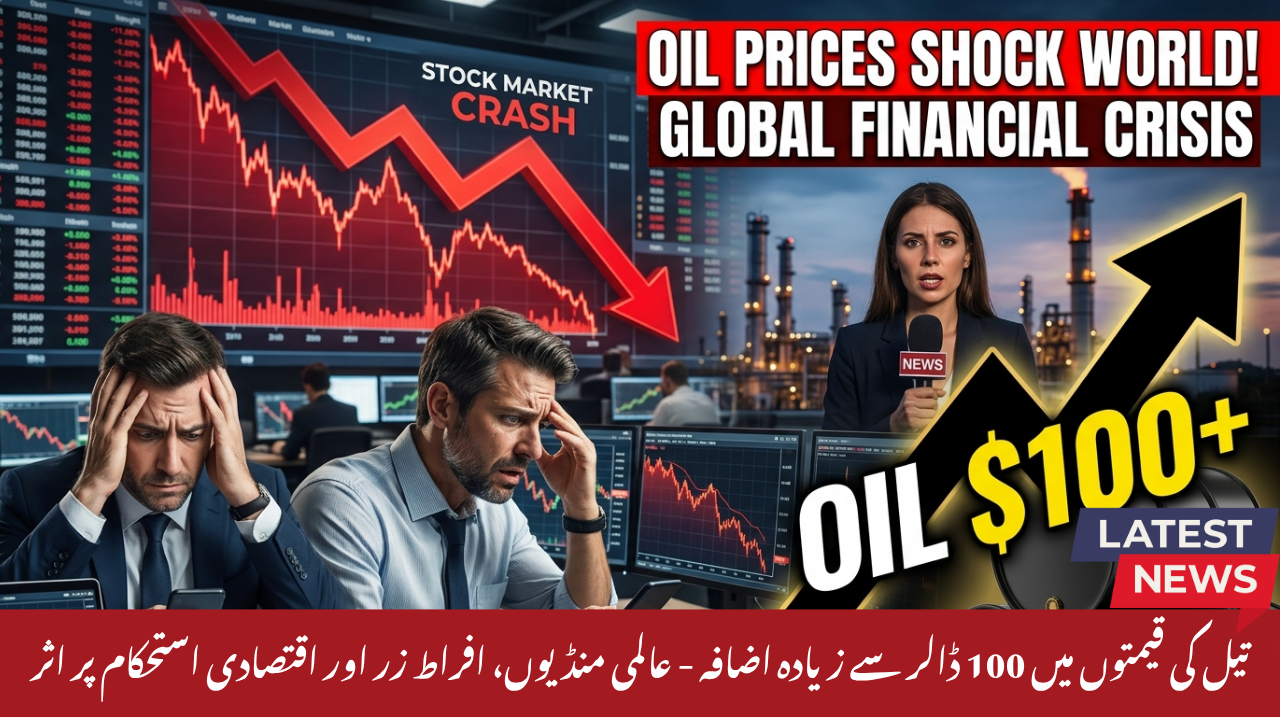
Oil Prices Surge Above $100: Global Markets Face Uncertainty
The recent surge in oil prices, with Brent crude crossing the $100 per barrel mark, has sent shockwaves across global financial markets. This dramatic increase is largely driven by ongoing geopolitical tensions and supply disruptions, creating widespread economic uncertainty. As energy costs rise, countries around the world are grappling with inflation, declining consumer confidence, and volatile stock markets.
Also read:
Pakistan Cricket Board (PCB) Jobs 2026 – Management & Technical Posts Apply Online
Why Are Oil Prices Rising?
The sharp increase in oil prices is primarily linked to geopolitical conflicts and supply chain constraints. When major oil-producing regions face instability, global supply tightens, pushing prices upward. Additionally, sanctions, trade restrictions, and reduced production output further contribute to the imbalance between supply and demand.
Another key factor is the post-pandemic recovery. As economies rebound, demand for fuel has surged, placing additional pressure on already strained supply chains. This combination of high demand and limited supply has created the perfect storm for rising oil prices.
Impact on Global Markets
The surge in oil prices has had a direct impact on global stock markets. Higher energy costs increase production and transportation expenses for businesses, reducing profit margins. As a result, investors often react negatively, leading to market volatility.
Energy-intensive industries such as manufacturing, aviation, and logistics are among the hardest hit. Meanwhile, oil and gas companies may experience short-term gains, but the broader market sentiment remains cautious due to economic uncertainty.
Rising Inflation and Cost of Living
One of the most significant consequences of rising oil prices is inflation. Fuel costs influence nearly every sector of the economy, from food production to transportation. As oil prices increase, businesses pass these costs onto consumers, leading to higher prices for goods and services.
Countries like the UK are already experiencing rising inflation rates, which are eroding purchasing power. Households are forced to spend more on essentials such as fuel, electricity, and groceries, leaving less disposable income for other expenses.
Declining Consumer Confidence
As the cost of living rises, consumer confidence tends to fall. People become more cautious about spending, which can slow down economic growth. In the UK and other affected economies, surveys have shown a noticeable decline in consumer sentiment, reflecting concerns about financial stability and future economic conditions.
Lower consumer confidence can have a ripple effect, impacting retail sales, housing markets, and overall economic activity. When consumers cut back on spending, businesses face reduced demand, potentially leading to layoffs and slower growth.
Global Economic Implications
The oil price surge is not just a short-term issue—it has long-term implications for the global economy. Central banks may respond by increasing interest rates to control inflation, which can further slow economic growth. Developing countries, in particular, face significant challenges as higher energy costs strain their budgets and increase debt levels.
Additionally, prolonged high oil prices may accelerate the transition toward renewable energy. Governments and businesses may invest more in sustainable alternatives to reduce dependence on fossil fuels and mitigate future risks.
Future Outlook
While oil prices are currently high, their future trajectory remains uncertain. Factors such as geopolitical developments, production decisions by oil-exporting nations, and global economic conditions will play a crucial role in determining price trends.
Experts suggest that volatility is likely to continue in the near term. Policymakers and businesses must adapt to these changing conditions by implementing strategies to manage costs and maintain stability.
Official Website Link
-
FOLLOW UPS FOR MORE UPDATES:
Whatsapp:
FAQs
1. Why have oil prices surged above $100?
Oil prices have increased due to geopolitical conflicts, supply disruptions, and rising global demand.
2. How do high oil prices affect inflation?
Higher oil prices increase production and transportation costs, leading to higher prices for goods and services.
3. Which industries are most affected?
Manufacturing, transportation, aviation, and logistics industries are heavily impacted.
4. Why are stock markets unstable during oil price surges?
Rising costs reduce corporate profits, causing investor uncertainty and market volatility.
5. How does this impact consumers?
Consumers face higher fuel, food, and energy costs, reducing their purchasing power.
6. What is happening to consumer confidence?
Consumer confidence is declining as people worry about rising living costs and economic uncertainty.
7. Can governments control oil prices?
Governments have limited control but can use policies like subsidies or strategic reserves to manage impact.
8. Will oil prices continue to rise?
Prices may remain volatile depending on global supply, demand, and geopolitical developments.
9. How does this affect developing countries?
Developing nations face higher import costs and increased economic pressure.
10. Could this accelerate renewable energy adoption?
Yes, high oil prices may encourage investment in alternative energy sources.
Conclusion
The surge in oil prices above $100 per barrel highlights the fragile nature of the global economy. From rising inflation to declining consumer confidence and volatile markets, the effects are widespread and complex. While short-term solutions may provide relief, long-term strategies such as energy diversification and economic resilience are essential for stability.
Disclaimer
This article is for informational purposes only and does not constitute financial or investment advice. Market conditions can change rapidly, and readers should consult professionals before making financial decisions.
1 thought on “Oil Prices Surge Above $100-Impact on Global Markets, Inflation & Economic Stability”