Pakistan Federal Budget 2026-27: A New Chapter for Economic Growth?
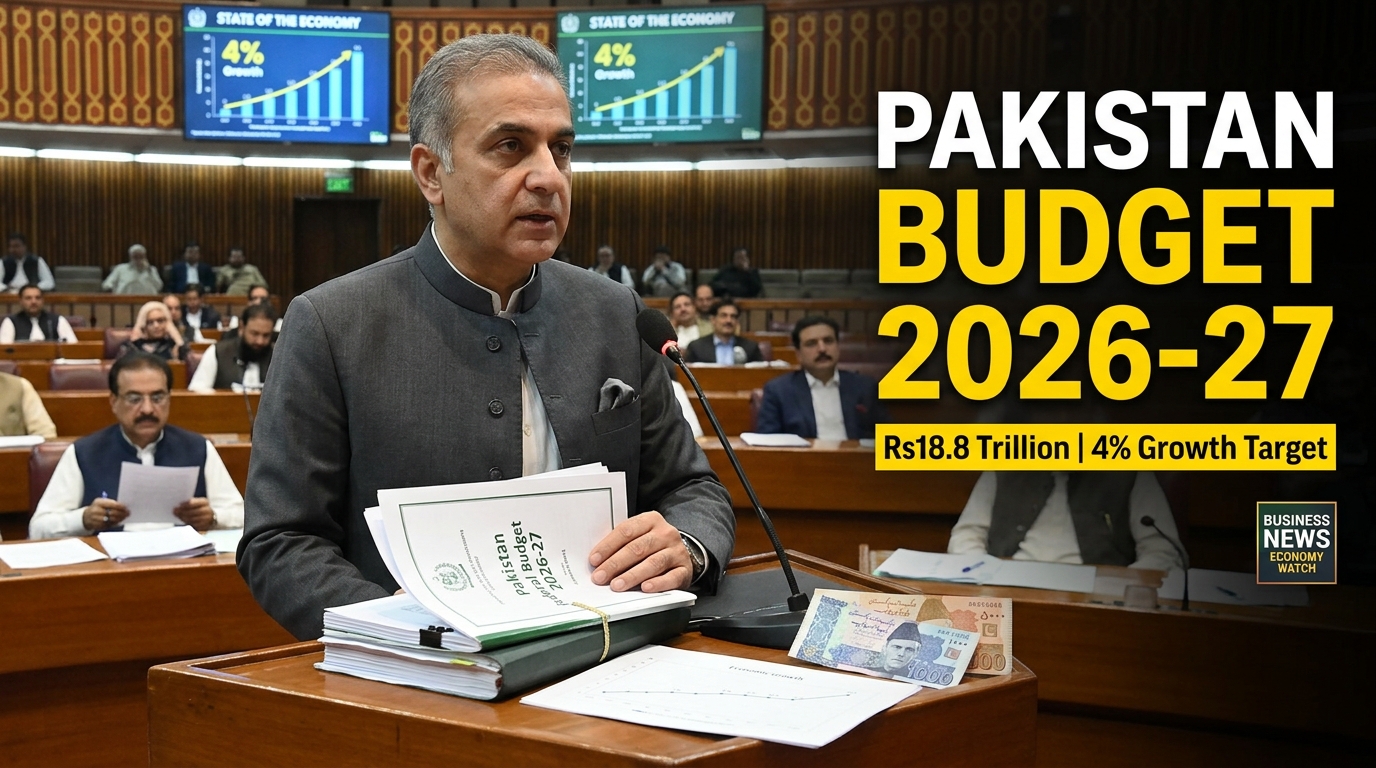
Pakistan’s Federal Budget 2026-27 has become one of the most talked-about economic developments in the country. The government has unveiled a massive Rs18.8 trillion budget, aiming to maintain economic stability while laying the foundation for sustainable growth.
Also read:
The budget reflects a delicate balancing act between economic recovery, fiscal discipline, rising security requirements, and commitments made under the International Monetary Fund (IMF) program. While the government has set an ambitious 4% GDP growth target, analysts believe the success of the budget will depend heavily on implementation, revenue collection, and investment activity.
Key Impression
“Pakistan’s new budget appears to be an attempt to transition from stabilization to growth, but IMF commitments remain the dominant factor shaping economic policy.”
Key Highlights of Pakistan Federal Budget 2026-27
The Federal Budget 2026-27 includes several notable allocations and economic targets:
- Total Budget Outlay: Rs18.8 trillion
- GDP Growth Target: 4%
- Inflation Target: 8.2%
- Defence Budget: Approximately Rs3 trillion
- Defence Spending Increase: Around 18%
- Federal PSDP Allocation: Rs1 trillion
- FBR Revenue Target: Rs15.26 trillion
- Fiscal Deficit Target: 3.6% of GDP
These figures demonstrate the government’s effort to maintain fiscal discipline while encouraging economic expansion.
Defence Spending Increases by 18%
One of the most discussed aspects of the Pakistan Federal Budget 2026-27 is the significant increase in defence spending.
The government has allocated approximately Rs3 trillion for defence, reflecting an increase of nearly 18% compared to the previous fiscal year. Officials argue that regional security concerns and national defence requirements justify the higher allocation.
While security remains a national priority, economists suggest that increased defence spending may reduce the government’s ability to invest more aggressively in development projects and social welfare programs.
IMF Commitments Continue to Shape Economic Policy
Pakistan remains under an IMF-supported economic reform framework, which continues to influence budgetary decisions.
The government has focused on:
- Maintaining fiscal discipline
- Achieving primary surplus targets
- Reducing fiscal deficits
- Improving tax collection
- Expanding the documented economy
These reforms are intended to strengthen economic stability and improve investor confidence. However, critics argue that IMF conditions often limit public spending and reduce flexibility for development initiatives.
Development Spending Faces Challenges
Development spending remains one of the biggest concerns in the Federal Budget 2026-27.
The Public Sector Development Programme (PSDP) allocation stands at Rs1 trillion, a figure many experts believe is insufficient to address Pakistan’s growing infrastructure, energy, healthcare, and education needs.
Limited development expenditure could slow long-term economic growth unless private sector investment compensates for the shortfall.
Debt Servicing Remains a Major Burden
Pakistan continues to face significant debt-related challenges.
A large portion of government expenditure is allocated to servicing domestic and external debt obligations. Interest payments consume a substantial share of total spending, leaving fewer resources available for development projects and social programs.
Reducing debt dependency remains one of the government’s most critical economic objectives.
Can Pakistan Achieve the 4% Growth Target?
The government’s 4% GDP growth target reflects optimism regarding economic recovery.
Achieving this goal will require:
Strong Private Sector Investment
Higher domestic and foreign investment will be necessary to stimulate production and job creation.
Export Growth
Increasing exports remains essential for improving foreign exchange reserves and reducing trade deficits.
Inflation Control
Maintaining stable inflation will support consumer purchasing power and business confidence.
Agricultural and Industrial Performance
Strong performance in agriculture and manufacturing sectors will be critical for overall economic expansion.
While the target is achievable, global economic uncertainty and domestic structural challenges may create obstacles.
Revenue Collection and Tax Reforms
The Federal Board of Revenue (FBR) has been assigned a tax collection target of Rs15.26 trillion.
To achieve this target, the government plans to:
- Expand the tax base
- Improve compliance
- Digitize tax systems
- Reduce tax evasion
- Encourage documentation of the economy
Successful implementation of these reforms will play a major role in determining the overall success of the budget.
Economic Outlook for FY 2026-27
The Pakistan Federal Budget 2026-27 reflects a cautious but growth-oriented approach.
The government aims to balance economic expansion with fiscal responsibility while maintaining commitments under the IMF program. Investors, businesses, and policymakers will closely monitor revenue performance, inflation trends, and development spending throughout the fiscal year.
If key reforms are implemented effectively, Pakistan could strengthen macroeconomic stability and move toward a more sustainable growth path.
Frequently Asked Questions (FAQs)
1. What is the total size of Pakistan Federal Budget 2026-27?
The total budget outlay is approximately Rs18.8 trillion.
2. What is Pakistan’s GDP growth target for FY 2026-27?
The government has set a GDP growth target of 4%.
3. How much has been allocated for defence spending?
Approximately Rs3 trillion has been allocated for defence.
4. How much has defence spending increased?
Defence spending has increased by nearly 18% compared to the previous fiscal year.
5. What is the inflation target in Budget 2026-27?
The government aims to keep inflation around 8.2%.
6. What is the FBR tax collection target?
The Federal Board of Revenue has been assigned a target of Rs15.26 trillion.
7. How does the IMF influence Pakistan’s budget?
IMF commitments affect fiscal policy, deficit targets, tax reforms, and public spending priorities.
8. What is the PSDP allocation for FY 2026-27?
The federal Public Sector Development Programme has been allocated Rs1 trillion.
9. What is the fiscal deficit target?
The fiscal deficit target has been set at 3.6% of GDP.
10. What are the biggest challenges facing the budget?
Debt servicing obligations, revenue collection targets, IMF commitments, and limited development spending remain the biggest challenges.
Conclusion
The Pakistan Federal Budget 2026-27 represents a significant effort to shift the economy from stabilization toward growth. With a total outlay of Rs18.8 trillion, a 4% GDP growth target, and substantial defence allocations, the government is attempting to balance security, economic reforms, and fiscal discipline.
However, IMF commitments, debt servicing pressures, and constrained development spending continue to shape the country’s economic direction. Ultimately, the success of the budget will depend on effective implementation, revenue performance, investor confidence, and broader economic conditions throughout the fiscal year.
Disclaimer
This article is for informational and educational purposes only. Budget figures, allocations, and policy measures may change following parliamentary approval, official notifications, or subsequent amendments. Readers are encouraged to consult official government budget documents for the most accurate and updated information.
Official Source
Ministry of Finance Pakistan: https://www.finance.gov.pk
FOLLOW UPS FOR MORE UPDATES:
Whatsapp:
https://whatsapp.com/channel/0029Vb7bBGqGpLHYH9ZEnU3H
1 thought on “Pakistan Federal Budget 2026-27: Rs18.8 Trillion Budget, 4% Growth Target and IMF Impact”